
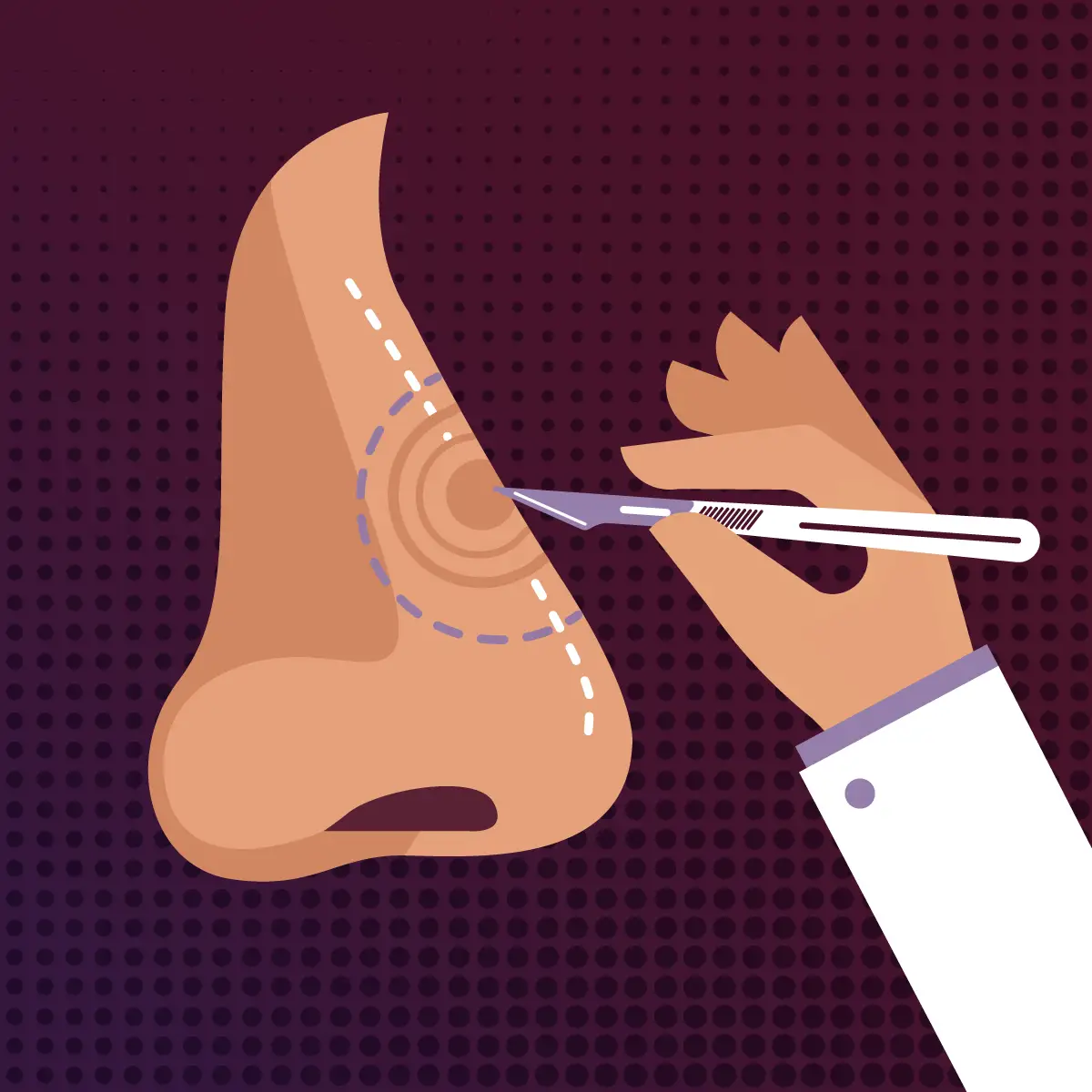
Precision matters because Mohs surgery to the nose involves two separate challenges: clearing the cancer from a site where it is more likely to recur, and then rebuilding one of the hardest areas of the face to reconstruct. Below, we explain why the nose is different, how wounds are typically closed, and what healing usually looks like week by week.
Why Is Skin Cancer on the Nose More Likely to Come Back?
The nose is one of the most sun-exposed parts of the body, and it is one of the most common places for basal cell carcinoma to develop. In fact, basal cell removal on the nose is one of the most frequent reasons people are referred for specialist surgery. Squamous cell carcinoma can also occur here.
Facial skin cancers are a high-risk location for recurrence. Several factors contribute:
- Some tumours, particularly certain basal cell carcinoma subtypes, can extend in thin, irregular strands beneath the surface that aren’t visible to the naked eye.
- Surgeons are understandably cautious about taking wide margins on the nose, as every millimetre of tissue counts.
- Cartilage and bone sit close to the surface, leaving less room for error.
When a standard excision doesn’t fully clear a skin cancer, further surgery may be needed. Our incomplete excision page explains more about this.
Why Is the Nose Harder to Reconstruct?
Even after the skin cancer on the nose has been cleared, the repair needs careful planning. Three features make the nose different.
Thin, Tightly Bound Skin
The skin on the upper nose and sidewalls is relatively thin, while the skin on the tip and around the nostrils is thicker, oilier and firmly attached to the cartilage beneath. Because of this mix, a technique that suits one part of the nose may look out of place on another.
Limited Donor Tissue
On the cheek or forehead, a surgeon can often borrow loose nearby skin to close a wound. The nose has very little spare skin, so tissue may need to be moved from the cheek, forehead or ear, matched as closely as possible for colour, texture and thickness.
Aesthetic Subunits
Surgeons divide the nose into “aesthetic subunits” such as the tip, bridge, sidewalls and the curved wings around the nostrils (ala). Scars tend to be less noticeable when they sit along the natural borders between these subunits. Planning a repair around them is an important skill in Mohs surgery when treating the nose, and it can make a meaningful difference to the final appearance.
The nostril rim also needs support. If a repair pulls on it, the nostril can lift or narrow, which may affect both appearance and breathing.
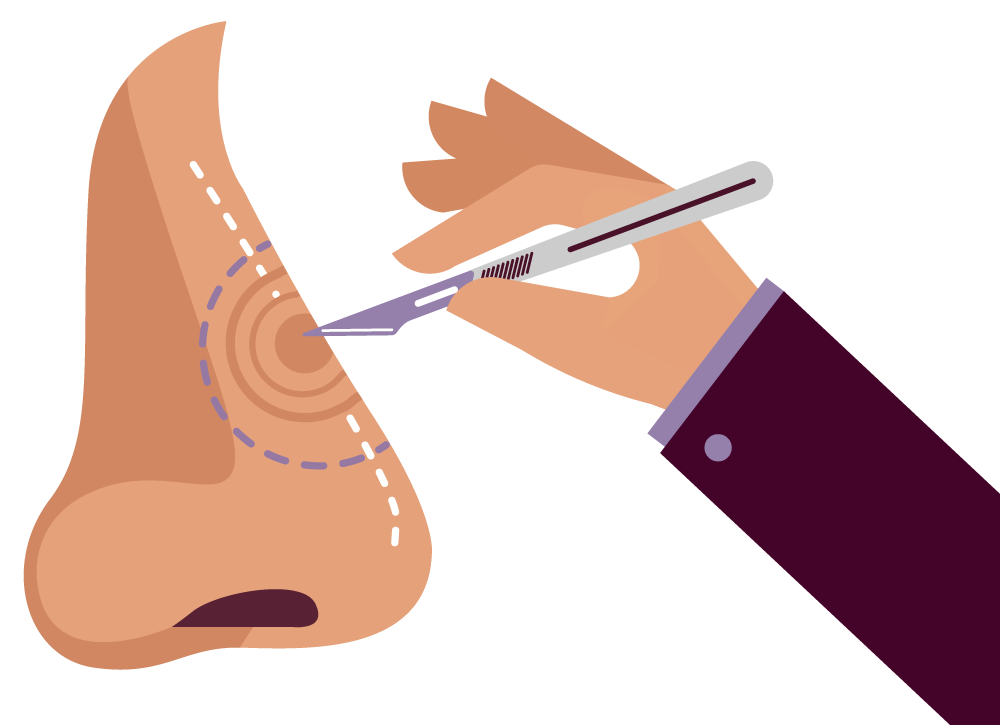
How Does Mohs Surgery for Skin Cancer on the Nose Work?
Mohs surgery is performed under local anaesthetic, as a day procedure. In broad terms:
- The visible skin cancer is removed with a thin margin of surrounding skin.
- The tissue is mapped, processed and examined under the microscope while you wait.
- If cancer cells remain at any edge, only that specific area is removed in the next stage.
- This continues until the margins are clear, after which the wound is repaired, often on the same day.
This approach examines the complete tumour margin, whereas routine pathology often samples only a small portion of it. That is why Mohs is so well suited to a site where both cancer clearance and tissue preservation are priorities.
Typical Closure Approaches After Mohs Surgery to the Nose
The right repair depends on the size, depth and location of the wound, as well as your skin type and preferences. Common options include the following.
Side-to-Side Closure
For small defects on the upper nose, where the skin is looser, the edges may be stitched directly together.
Local Flaps
A flap moves neighbouring skin, still attached to its blood supply, into the wound. Flaps often give a good colour and texture match and are widely used for nasal skin cancer repairs. Bilobed and nasolabial flaps are common examples.
Skin Grafts
A graft takes skin from another area, such as in front of or behind the ear, and places it over the wound. Grafts can work well for larger or more superficial defects.
Staged Repairs
Larger or deeper wounds, especially those involving cartilage, may need a two-stage repair, such as a forehead flap, or input from a plastic surgeon. Where this is likely, your surgeon will discuss it with you in advance.
What Does Healing Look Like? A Visual Healing Timeline for Mohs
Everyone heals differently after treatment for skin cancer on the nose, so this timeline is general guidance rather than a prediction for your case.
- Days 1 to 3: The area is dressed and may feel tight or swollen. Bruising around the eyes is common, especially after a flap. Rest, keep your head elevated and follow your wound care instructions.
- Week 1: Swelling begins to settle. Stitches are usually removed around five to seven days after surgery.
- Weeks 2 to 6: The scar is typically pink, and can feel firm. This is a normal part of healing, and some people notice mild numbness around the site.
- Months 2 to 3: Redness gradually softens and the scar begins to flatten. Flap and graft repairs often look noticeably more settled by this stage.
- Months 6 to 12: Most scars continue to mature and fade. Options such as scar massage or laser may be discussed if an area is slow to settle.
Regular skin checks remain important afterwards, as having one skin cancer increases the likelihood of developing another.
Why Choose a Specialist for Skin Cancer Treatment on the Nose?
Mohs surgery on the nose combines cancer removal, microscopic analysis and facial reconstruction in a single procedure. A fellowship-trained Mohs surgeon is trained in all three, which may help reduce the risk of recurrence and support a natural-looking result.
At Skintel, Dr David Lim is a specialist dermatologist and Mohs Surgeon. He has considerable surgical experience, successfully performing surgery on over 20,000 skin cancers as well as countless minimally invasive procedures. Some superficial skin cancers on the nose may respond to non-surgical options such as Efudix, Aldara or photodynamic therapy. An honest assessment of all your options with an experienced skin cancer dermatologist is the best place to start.
How Much Does Mohs Surgery for the Nose Cost in Auckland?
Costs vary depending on the size of the tumour, the number of stages and the type of repair required. Many health insurers cover this surgery for eligible skin cancers, and Skintel is an Affiliated Provider for Southern Cross and nib for contracted skin cancer treatments where criteria apply. Visit our medical insurance page or contact the team for a personalised quote.
Worried About a Spot but Not Yet Diagnosed?
You don’t need a diagnosis or a GP referral to see a specialist. It’s worth booking a skin check if you notice:
- A pearly, shiny or pink bump that persists
- A sore that bleeds, crusts or doesn’t heal within a few weeks
- A scaly patch that keeps returning
- Any new or changing spot
These signs don’t necessarily mean skin cancer, and many spots turn out to be harmless. Dermatologists use dermoscopy to assess lesions closely, which can help avoid unnecessary biopsies or removals. If you’re unsure about skin cancer on the nose or face, a specialist opinion is a sensible first step.
The Bottom Line for Skin Cancer on the Nose & Mohs
Skin cancer on the nose and surrounding skin is common in New Zealand, and in many cases highly treatable. Because the nose is a higher-recurrence site with little spare tissue, Mohs surgery performed by an experienced specialist offers a careful balance between clearing the cancer and preserving your appearance.
If you’ve been diagnosed with skin cancer on the nose, or you’d like a second opinion on a treatment plan, explore our Mohs surgery page to learn more about Mohs surgery, or book an appointment at our Rosedale clinic on Auckland’s North Shore.
