
Why Mohs Surgery
Endorsed by prestigious organisations including the National Comprehensive Cancer Network (NCCN), Mohs surgery gives patients the best chance of complete cancer removal on the first attempt, while preserving as much healthy tissues as possible.
Here’s why it’s considered the most effective option:
Unmatched Precision
Mohs examines 100% of the tumour margins, compared to less than 5% for routine pathology. This allows surgeons to detect and remove cancerous cells with a high level of accuracy.
Higher Success Rate
Mohs offers a positive success rate for certain skin cancers, especially when caught early. While the overall outcomes from Mohs remain high, results do vary for more aggressive and recurrent cancers, making it important to have an approach that is more individualised.
Better Healing Process and Cosmetic Outcome
Because the procedure mostly removes only the affected tissue, more healthy skin and tissues are preserved – this achieves better cosmetic results and makes for an easier healing process.
Quick Results
Another major benefit is that most cancer margins are checked during the procedure itself. This means patients are informed on the same day about whether their cancer is fully removed, avoiding the anxiety and inconvenience of waiting for results over an extended period of time.
Mohs Surgery has Fewer Complications
Due to the higher precision, Mohs has been shown to reduce the risk of future complications, such as:
- Reduced risk of the skin cancer returning in the future
- Reduced risk of the skin cancer involving into adjacent structures such as travelling down nerves
- Reduced risk of spread to distant locations in the body (metastasis)
Which is the best Skin Cancer Removal?
There are alternative treatments to Mohs. However, Mohs has the highest cure rate, the lowest risk of recurrence and often the best cosmetic result.
How Does Mohs Surgery Work?
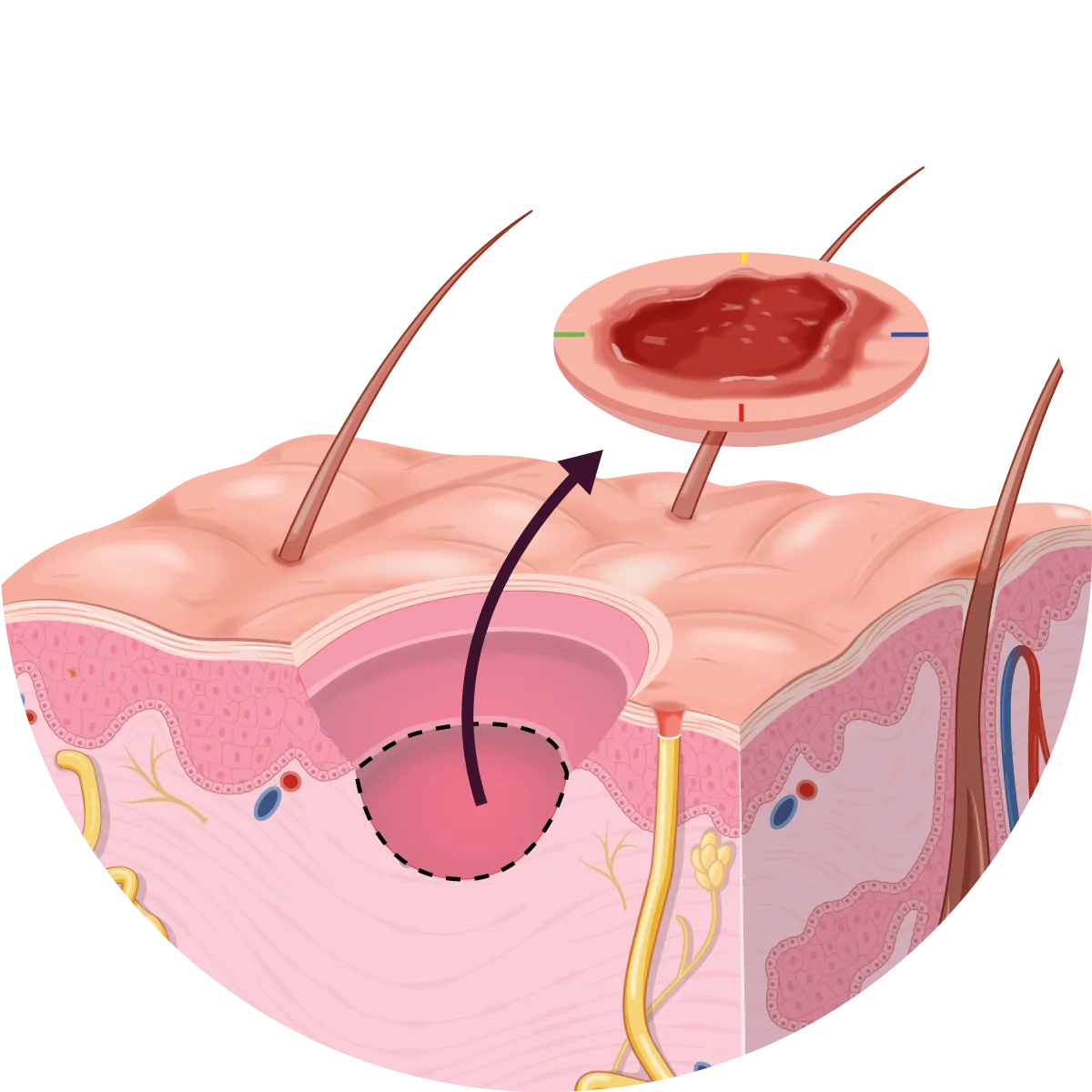
Like an iceberg, skin cancers often grow beyond what appears on the surface. At Skintel, we follow the below step-by-step, meticulous process to ensure all cancer is removed.
- Local anaesthetic is provided to numb the area.
- The visible tumour and a small safety margin of tissue are surgically removed.
- The tissue is mapped, colour-coded, and sent for processing to our on-site lab.
- Thin horizontal slices are taken, stained, and examined under a microscope.
- If cancer cells are detected at the margins, the surgeon removes more tissue – but only from the precise area where cancer is detected until there is no evidence of cancer remaining.
- The wound is then either closed with stitches or allowed to heal naturally.
Mohs Surgery Provides Long Term Value
Though more expensive up front due to its meticulous nature, Mohs is often more cost-effective in the long run. If you’d like to learn more about the cost of mohs we have more details here. Its high success rate also means fewer repeat procedures. Most New Zealand health insurers recognise the long-term value of Mohs and fund it, but this will depend on your individual policy terms. Unfortunately, only one hospital in New Zealand offers it through the public health system.
Why Choose Skintel for Mohs Surgery
At Skintel, we are dedicated to delivering the highest standards of Mohs. We regularly audit our work and participate in ongoing research to further improve our outcomes. We are also currently involved in research, developing an artificial intelligence (AI) system to assist with our Mohs surgery slides, achieving over 99% accuracy. While our skilled human surgeon will always be making the final call, the AI acts as an additional layer of quality control. You can learn more about mohs surgery at Skintel here.
If you have any questions or are keen to book an appointment with one of our specialists, please reach out to us here and our friendly team will assist you.
Frequently Asked Questions
Delays to surgery can allow the cancer time to grow into surrounding healthy tissue, making removal more invasive and increasing recurrence risk. While timing varies case by case, undergoing Mohs surgery within 6-8 weeks is normally fine.
Duration can vary, depending on the complexity of the skin cancer. However, the average Mohs surgery will take about 3 to 5 hours.
We normally recommend avoiding heavy lifting and strenuous activiting for at least 48-72 hours. These activities can raise your blood pressure which may encourage bleeding at your surgical site. After this time you should avoid any tension on the found for 2-3 weeks. Avoid immersing in water until the stitches are removed.
There are not really any restrictions for the day of Mohs surgery. Mohs is normally performed with local anaesthetic, meaning you can eat breakfast. We provide food and refreshments throughout the day. Please all your regular medications on the day of surgery. Do not stop your blood thinner medications including warfarin, aspirin, clopidogrel and dabigatran (Pradaxa).
Mohs surgery is normally performed with local anaesthetic which means you will normally be able to drive yourself home. However, if the skin cancer is close to your eyes and the dressing obstructs your vision you may need someone else to drive you home.
It can take anywhere between 4 to 6 weeks for a Mohs wound site to fully heal depending on the size of the wound and if any issues occur in the healing process. Expect minimal pain upon the healing time.
Most patients will have stitches. Very seldom do we leave a wound to heal on its own, however, in some cases, this is applicable if the wound is located where it could heal well, or where you mightn’t be so concerned about scaring. Generally, Mohs patients will have a wound-check appointment with our nurses two days after the procedure, and then have their stitches removed 7 to 10 days after the procedure.
There are alternative treatments to Mohs surgery. However, Mohs surgery has the highest cure rate, the lowest risk of recurrence and often the best cosmetic result.
